
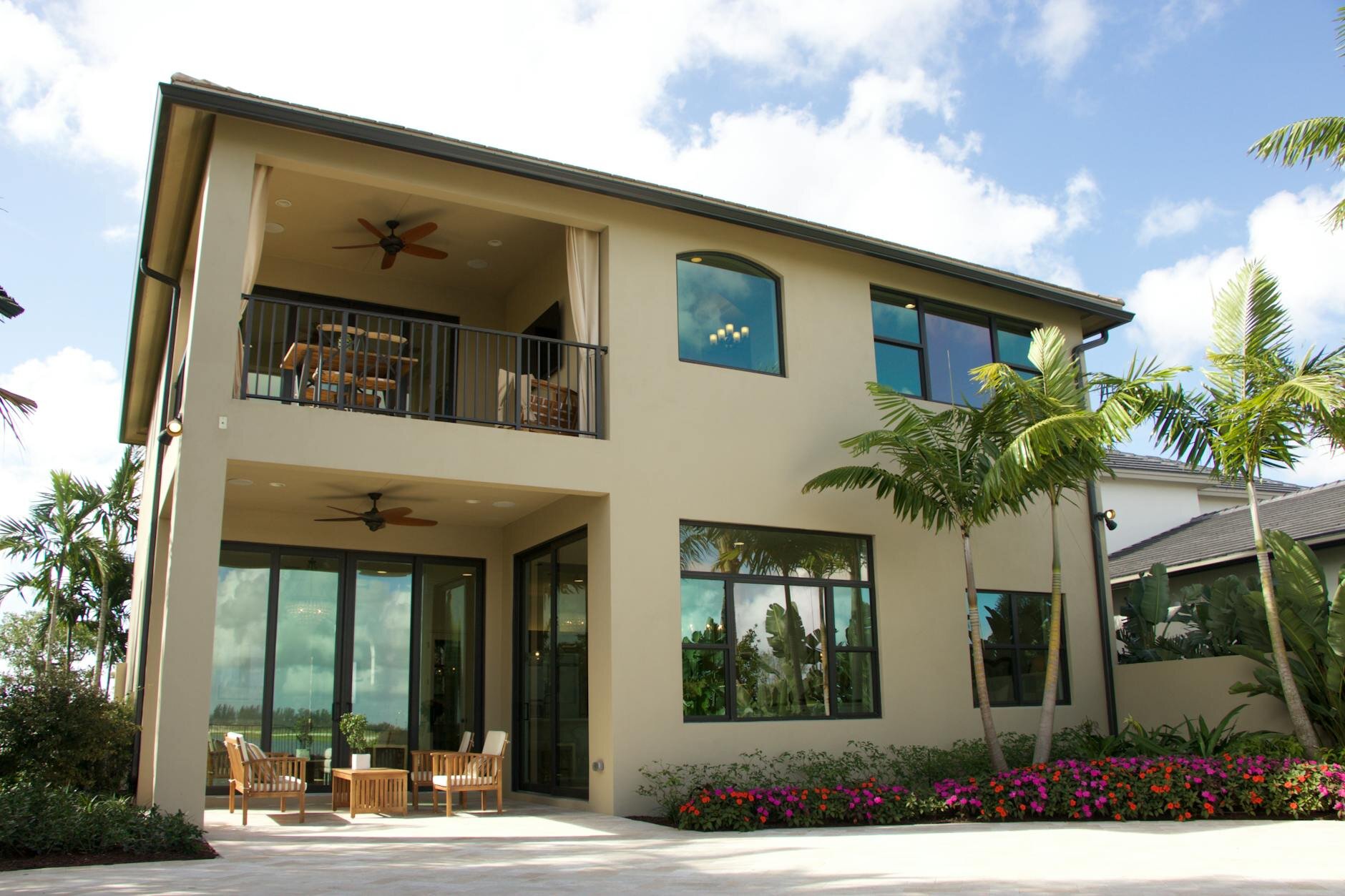
Homeowners insurance is a policy that helps cover the cost of repairing or rebuilding your home — and replacing your belongings — if they’re damaged by covered events like fire, storms, or theft. It doesn’t prevent damage, but it protects you financially when something goes wrong. Most mortgage lenders require it because your home is the collateral on your loan.
For most homeowners, this isn’t optional — it’s a core part of protecting what is often their largest financial investment.
So what does a homeowners insurance policy actually cover? And how much coverage do you really need? We’ll break that down next.
What is homeowners insurance?
At its core, a homeowners insurance policy is a contract between a homeowner and an insurance company. The homeowner agrees to pay annual premiums. In exchange, the insurance company agrees to help pay for expensive repairs if ever needed. A policy could even pay to rebuild an entire home, if necessary.
For example, if lightning struck a tree, causing it to fall onto your home, you could file a claim with your homeowners insurance company. The company, after checking out the damage, would confirm the costs of repairs and send a check, per policy guidelines.
How much of the repair cost will the insurance company pay? That depends on the insurance policy’s level of coverage and other details. Some policies would cover the entire expense, along with the cost of a hotel room or short-term rental while your house gets fixed. Other policies may cover only a percentage.
If you didn’t have homeowners insurance, you’d need to come up with the $80,000 out of pocket and also pay for other accommodations if you couldn’t stay in your home during repairs. Many homeowners couldn’t afford this.
How does homeowners insurance work?
Some homeowners expect their insurance to pay for preventive maintenance, such as removing trees that may fall on the home in the future. It might be smart to take this kind of precaution, but homeowners insurance won’t pay for it. Insurance responds to perils that have already happened.
How much a homeowners insurance policy will pay on a claim depends on a few details:
- The deductible: This is the amount of money the policyholder must pay out of pocket to unlock the insurance coverage. If the policy’s deductible is $2,000, the homeowner must pay this $2,000 before the insurance approves paying a claim.
- Coverage limits: This is the maximum amount your policy will pay for certain types of claims in a year. If a policy pays up to $250,000 in personal liability protection, the homeowner couldn’t file a claim for more than that amount.
- Coverage type: Some policies will pay the replacement cost for property damaged or destroyed by a covered peril. Others will pay actual cash value (ACV). Replacement cost tends to be higher because it doesn’t factor in depreciation. For example, it costs more to replace a 5-year-old laptop (replacement cost) than it would cost to buy another 5-year-old laptop (cash value).
The most complete homeowners insurance policies tend to charge the highest annual premiums. But insurance is a competitive market. Shopping around, and using comparison shopping tools can help homeowners find the best coverage for less.
What does homeowners insurance cover?
The annual premium homeowners pay provides a variety of different coverages, including:
Dwelling coverage
Dwelling coverage is the centerpiece of a standard homeowners insurance policy (HO-3). It protects the physical structure of the home: the walls, roof, floors, build-in systems like plumbing and electrical.
If all or part of your home is destroyed by a fire or a storm, this is the part of your policy that can pay to repair or rebuild your home. Likewise, if burst pipes damage the kitchen cabinetry, this coverage could help.
Personal property coverage
This coverage can pay to replace your personal items, including furniture, electronics, clothing, and appliances — things that can be removed from the home. This coverage helps after a break-in, vandalism, or after another type of peril destroys personal property. Even if your personal items aren’t at home when they’re damaged or destroyed, this coverage could help reimburse you.
Liability coverage
Liability protection can cover legal and medical expenses caused by injuries on your property or if you accidentally cause damage to someone else’s property.
For example, let’s say you’re hosting a graduation party and one of your guests trips on the walkway in front of your home. This guest sprains an ankle and misses two weeks of work. They decide to sue you to cover the medical expenses and lost wages, saying the pavers in front of your home were installed incorrectly. Liability coverage could pay the resulting legal costs.
Additional living expenses (ALE)
Also known as “loss of use” coverage, this coverage helps pay for temporary living expenses, such as hotel accommodations and meals, when you can’t live in your home because of a covered peril like fire or storm damage. ALE won’t pay if you decide to move out for a month while you renovate or if an uncovered peril, like a flood, makes your home uninhabitable.
Other structures coverage
This covers detached garages, sheds, fences, gazebos, or other structures that aren’t connected to your main dwelling. This coverage amount is usually set as a percentage of your dwelling coverage.
Medical payments coverage
This coverage enhances your liability protection by paying for minor medical expenses if a guest gets injured on your property. Let’s say one of your guests suffers a dog bite. Even if the guest doesn’t sue, creating the need for a liability claim, medical payments coverage could help.
What homeowners' insurance doesn’t cover?
Home insurance covers a lot, but it doesn’t cover everything. Knowing what’s excluded matters as much as knowing what your policy covers.
Common homeowners insurance exclusions include:
- Flood damage: Standard policies don’t cover damages from flooding. A separate flood insurance program is required for homes in flood plains.
- Earth movement: Earthquakes, landslides, volcanic eruptions, and sinkholes are usually excluded from a standard homeowners policy.
- Pest infestations: Damage from termites, rodents, or insects is considered preventable maintenance and not covered by insurance.
- Wear and tear: Gradual deterioration or neglect isn’t covered. For example, insurance won’t pay to replace an outdated roof. (It could pay to replace a roof that’s suffered a lot of hail damage.)
- Mold (in many cases): Unless it's caused by a covered peril, mold damage is usually excluded.
- Sewer backups: Unless policyholders pay for a policy endorsement for this purpose, they’ll be on their own to clean up this mess.
- High-value items beyond limits: Jewelry, art, collectibles, musical instruments and other expensive items may exceed standard coverage caps. Policyholders can expand their coverage to include these types of items, but it’s not standard.
Homeowners who worry about these coverage gaps should work with insurance agents to customize their coverage for their unique needs.
Types of homeowners insurance policies
So far we’ve described an HO-3 home insurance policy, which is the ordinary coverage single-family homes need. There are other options for some homeowners:
- HO-1 (Basic form): This type of policy covers a limited list of perils. Anything not listed in the policy will not be covered. HO-1s are rarely used today.
- HO-2 (Broad form): This policy expands the limited scope of HO-1 but still excludes unnamed perils from coverage.
- HO-3 (Special form): Most single-family homeowners buy this coverage. It covers homes against all perils unless they’re specifically excluded from the policy. (Personal belongings coverage may still be limited to named perils.)
- HO-5 (Comprehensive form): This policy offers the highest level of protection, covering both your home and your personal belongings on an open-peril basis with fewer exclusions.
- HO-4 (Renters insurance): This policy provides personal property and personal liability coverage but no dwelling or structural coverage. (The landlord’s policy covers that.)
- HO-6 (Condo insurance): This special type of coverage combines HO-3 and HO-4 policies. Condo owners get personal property and liability coverage along with some structural protection for the inside of their home. Their Homeowners Association’s policy covers most of the structure along with shared spaces.
Insurance agents will likely quote HO-3 coverage when you’re buying a single-family home, but find out for sure, especially if you think you need another type of policy.
How much does homeowners' insurance cost?
The owner of a $400,000 home pays about $2,500 a year for a standard insurance policy. That’s a little more than $200 a month added into the home’s mortgage payment.
Your cost will vary based on several factors:
- Your home’s location: Homes in areas prone to hurricanes, wildfires, or high crime rates typically cost more to insure. State regulations and local construction costs also affect the price of coverage. Proximity to fire hydrants and emergency services can affect insurance costs.
- Home value and rebuild cost: More expensive homes cost more to repair and replace, so these homes also cost more to insure, on average. Policies that pay out a home’s replacement value usually cost more than policies that pay cash value.
- Age and condition of your home: Older homes can increase premiums. Replacing an older roof and older windows can lower premiums.
- Claims history: A homeowner who has never filed a homeowners insurance claim will often pay less for coverage than a homeowner who’s filed several claims in the past few years. If you can afford to fix water damage or smoke damage yourself after a cooking mishap, for instance, it may save money in the long run to avoid filing a claim.
- Deductible amount: Policies with higher deductibles usually come with lower premiums. (Make sure you can afford the deductible since paying it unlocks the policy’s coverage when needed.)
- Credit score (in many states): Insurers in many states can assess risk by checking a policy applicant’s credit scores. On the whole, homeowners with lower credit scores are more likely to file a claim.
Shopping around and comparing quotes can help you find the best balance between cost and coverage.
What homeowners insurance is FAQs
What is the difference between homeowners insurance and mortgage insurance?
Homeowners insurance protects your physical home and your freedom to use the home. Private mortgage insurance protects the mortgage lender if you default on your loan. They serve different purposes. However, both coverages usually get added into a home’s mortgage payment.
Is homeowners insurance required?
No. Unlike motorists, homeowners aren’t required by state law to carry homeowners insurance. But mortgage lenders almost always require the homeowner to buy coverage since the lender risks losing money on uninsured homes.
Is homeowners insurance tax-deductible?
Not usually. But people who write off home office expenses can deduct part of their annual homeowners insurance premiums as a business expense.
Does homeowners insurance cover natural disasters?
It depends on the disaster. Policies typically cover events like windstorms and fires, but exclude floods and earthquakes unless you purchase separate coverage.
How much coverage do I need?
Carry enough dwelling coverage to rebuild your home at current construction costs, not just the home’s market value. Your liability coverage should be high enough to protect your assets.
Conclusion
Unless you have enough cash to build another home if yours gets destroyed by a storm or a fire, you need homeowners insurance. Even if you could afford to buy another home, insurance can still be a great investment.
On average, paying $200 to $250 a month generates enough coverage for a house valued at $400,000. For most homeowners that’s a pretty good deal.
Better Mortgage’s monthly payment calculator includes the cost of homeowners insurance so you can compare real monthly costs as you shop for home loans.
...in as little as 3 minutes – no credit impact