
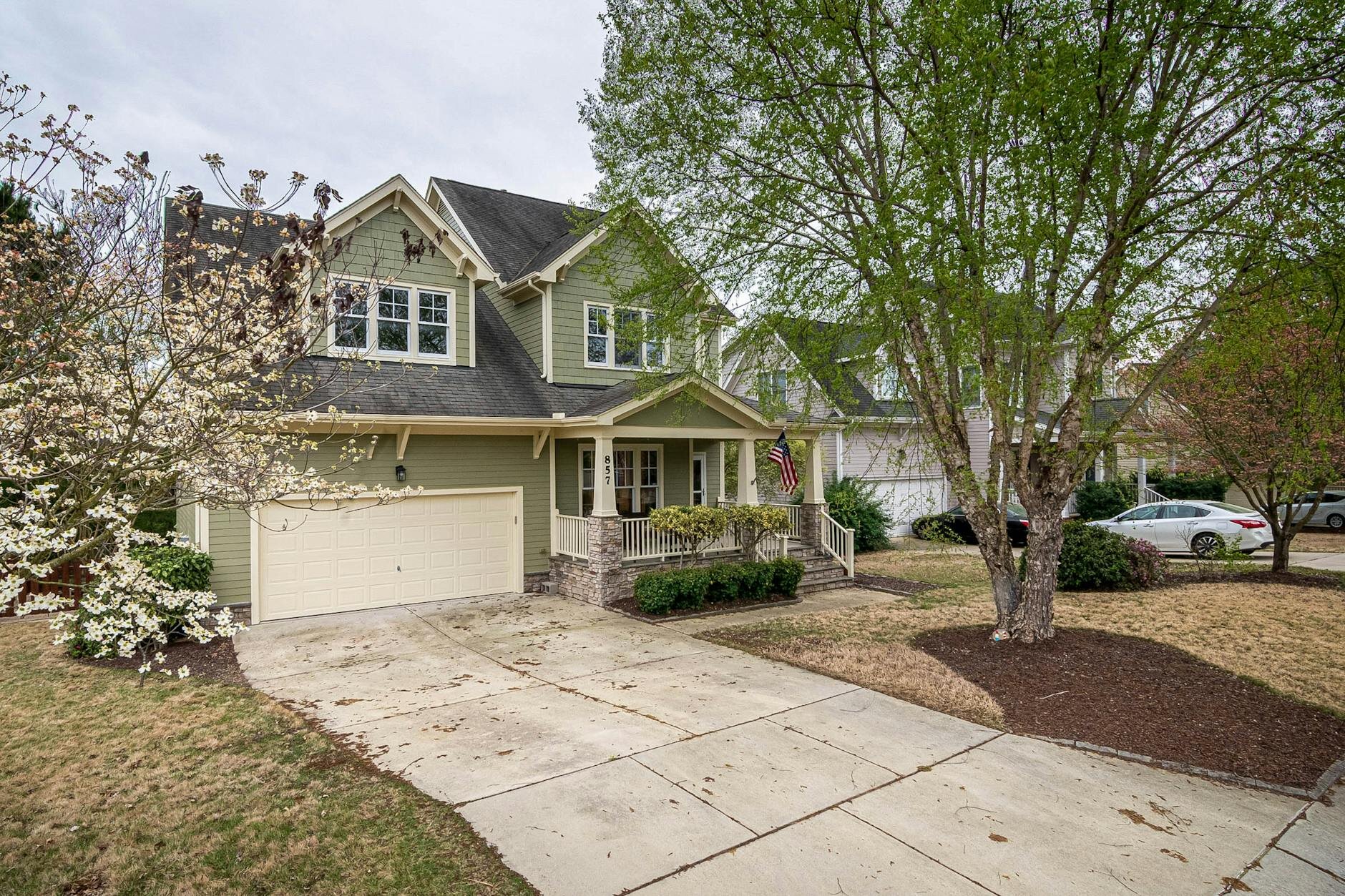
A Zestimate is an automated estimate of a home's value generated by an algorithm. It's a useful research tool, but it plays no role in the mortgage process.
Lenders do not accept Zestimates. When you apply for a mortgage, your lender will order a licensed appraisal conducted by a certified appraiser who physically inspects the property, reviews comparable sales, and follows industry standards set by USPAP (Uniform Standards of Professional Appraisal Practice). The appraised value is what determines how much your lender will let you borrow.
Zestimates carry a median error rate of around 7% for off-market homes — meaning a home Zillow values at $400,000 could be appraised at $372,000 or $428,000. On a purchase, if the appraisal comes in lower than the agreed purchase price, you may need to renegotiate or bring extra cash to closing.
Zestimates offer a general sense of market value before you start shopping, but they should not be used to estimate borrowing power, set a purchase price, or predict the outcome of a formal appraisal.
...in as little as 3 minutes — no credit impact
What is a Zestimate and how does it work?
A Zestimate is Zillow's automated valuation model (AVM) — a computer-generated estimate of a home's current market value. The algorithm pulls from publicly available data sources including county and tax assessor records, MLS listing feeds, recent sale prices for comparable homes, and user-submitted information about the property.
This model weighs factors like square footage, lot size, number of bedrooms and bathrooms, and the home's age, then compares those details against similar homes that have recently sold nearby.
The result is produced instantly, at no cost, and updated regularly — which is what makes it attractive to homeowners and buyers who want a quick read on market values.
What the Zestimate cannot see is where the real limitations come in. The algorithm has no way of knowing the actual condition of the home. It cannot factor in a recently renovated kitchen, a leaking roof, a beautifully landscaped yard that isn't in the tax record, or any other physical characteristic that would meaningfully affect what a buyer would actually pay. If those changes haven't been recorded in public data, they simply don't exist in the model.
Accuracy also varies significantly depending on where the home is and whether it's currently listed for sale. Homes that are actively on the market have more current, detailed data available — listing price, photos, days on market — which tightens the model's margin of error. Off-market homes have far less data to work with, which is why their error rates are substantially higher.
Why lenders don't use Zestimates
When you apply for a mortgage, your lender needs to verify the property is worth at least as much as the loan they're being asked to approve. That verification cannot come from an algorithm. It requires a licensed appraiser — a certified professional who visits the property in person, conducts a detailed physical inspection, researches comparable recent sales, and produces a report that meets the Uniform Standards of Professional Appraisal Practice (USPAP).
USPAP is the industry-wide code of conduct that governs licensed appraisers. It requires independence, meaning the appraiser cannot have any financial stake in the transaction, and it mandates specific methodology for how value is determined. Lenders rely on appraisals that meet these standards because they need a defensible, regulated opinion of value — not an algorithm's estimate.
The appraised value sets the ceiling for your loan. Lenders calculate your loan-to-value (LTV) ratio using the appraised value, not the purchase price or any online estimate. LTV represents the loan amount as a percentage of the property's value. Most conventional loan programs have maximum LTV thresholds, and exceeding them — whether because of a low appraisal or a small down payment — can affect your rate, require private mortgage insurance (PMI), or make the loan ineligible entirely.
Zestimate vs. professional appraisal — what's the difference?
| Zestimate | Licensed appraisal | |
|---|---|---|
| Who produces it | Automated algorithm | Licensed, certified professional |
| Physical inspection | No | Yes — in-person visit required |
| Data sources | Public records, MLS, user data | Comps, on-site inspection, USPAP methodology |
| Cost | Free | Typically $300–$550 |
| Lender accepted | No | Yes — required for most mortgage transactions |
| Accuracy | Median error ~7% (off-market) | Regulated standard; subject to formal appeal process |
| Used to determine loan amount | No | Yes |
Table is for illustrative comparison only. Appraisal costs vary by property type, location, and lender requirements.
How much can a Zestimate be off — and what does that mean for your mortgage?
According to Zillow's own published accuracy data, the nationwide median error rate for off-market homes is about 7%. For homes that are actively listed, the median error rate drops to around 2%. Those numbers are medians — meaning half of Zestimates fall within that range, and half do not.
In practical terms, a 7% margin of error can represent a significant amount of money. Consider what that looks like on a $400,000 home:
| Home value | 7% margin of error | Potential Zestimate range |
|---|---|---|
| $300,000 | ±$21,000 | $279,000 – $321,000 |
| $400,000 | ±$28,000 | $372,000 – $428,000 |
| $600,000 | ±$42,000 | $558,000 – $642,000 |
Example is for illustrative purposes only. Rates, payments, and total interest will vary based on credit profile, loan terms, and market conditions.
For buyers, the gap between a Zestimate and the actual appraised value matters most when the Zestimate is higher than what the appraiser determines. If you agreed to pay $400,000 for a home, budgeted based on a Zestimate of $410,000, and the appraisal comes in at $375,000, your lender will base your loan on $375,000. You would need to cover the difference — either by renegotiating the purchase price down, bringing more cash to closing, or walking away if your contract includes an appraisal contingency.
For homeowners refinancing, a Zestimate that's higher than the appraised value could mean less equity than expected, which affects how much you can borrow in a cash-out refinance.
...in as little as 3 minutes — no credit impact
What actually determines your home's value for a mortgage?
A licensed appraiser evaluates a home based on what they can see, measure, and verify in person — something no algorithm can replicate. Understanding what appraisers actually assess helps you anticipate your appraisal outcome and identify what could help or hurt it.
Appraisers consider the home's physical characteristics: square footage, number of bedrooms and bathrooms, lot size, layout, and overall condition. They note the quality of finishes, the state of major systems, and any recent renovations. Location carries significant weight — proximity to schools, employment centers, transportation, and the general desirability of the neighborhood all factor in.
The core of an appraisal is the comparable sales analysis, also called comps. The appraiser identifies recently sold homes in the area that are similar in size, condition, and features. If your home is larger or better maintained than the comps, that can support a higher value. If the comps reflect a softening market, the appraised value may come in below what you expected.
Factors that Zestimates routinely miss — and that appraisers catch — include the actual condition of the home, unreported renovations or additions, unique architectural features, and anything that affects livability or desirability that isn't captured in a public record. Understanding the factors that impact home value before your appraisal can help you prepare.
The appraised value also drives your LTV ratio. Learn more about how appraised value vs. market value function differently in the mortgage process, and what the difference between assessed value vs. market value means for property taxes versus lending.
What to do if your appraisal differs from your Zestimate
Finding out that a licensed appraiser's number differs significantly from what you saw on Zillow is common — and manageable, as long as you know your options.
If the appraisal comes in lower than the purchase price, the deal isn't necessarily dead. You have several paths forward. You can renegotiate the purchase price with the seller to match the appraised value. You can cover the gap with additional cash at closing.
You could request a reconsideration of value (ROV) from your lender if you believe the appraiser missed a relevant comparable sale or made an error in their analysis. And if you included an appraisal contingency in your offer, you may have the option to walk away from the deal without losing your earnest money. Understanding how a home appraisal works before you get into a contract can help you navigate these scenarios more confidently.
If the appraisal comes in higher than the Zestimate or purchase price, that's the better scenario. A higher appraisal means you have immediate equity in the home from the moment you close. It also lowers your LTV ratio, which can improve your loan terms. Know, too, that how long an appraisal stays valid matters if your closing is delayed.
For refinances, if your Zestimate is meaningfully higher than the appraised value, your cash-out options may be more limited than expected. Your borrowing power on a cash-out refinance depends directly on your home's appraised value — not its Zestimate.
Before you get to any of these steps, knowing exactly how to determine the fair market value of a home can help you go into the process with realistic expectations. And having the right documents needed for pre-approval ready ahead of time keeps the process moving smoothly once you're under contract.
Frequently asked questions
I checked Zillow and my home is worth $420,000 according to the Zestimate — will my mortgage lender use that number?
No. Lenders do not use Zestimates at any point in the mortgage process. When you apply for a mortgage or refinance, your lender will order a formal appraisal conducted by a licensed appraiser who physically inspects the property. The appraised value — not the Zestimate — determines the maximum loan amount your lender will approve.
How accurate is Zillow's Zestimate compared to what a lender's appraiser will actually say my home is worth?
Accuracy varies. Zillow's published median error rate for off-market homes is approximately 7% — meaning half of Zestimates are within that margin, and half aren't. On-market homes tend to have more accurate Zestimates because more current data is available, but even those carry a median error of around 2%. A licensed appraiser who visits the property in person will almost always produce a more accurate and reliable valuation than an automated model.
My Zestimate is $50,000 higher than the appraiser's number — what happens to my mortgage now?
Your lender will base your loan on the appraised value, not the Zestimate or the purchase price. If the gap creates a problem for your loan amount, your options include renegotiating the purchase price with the seller, bringing additional cash to closing, requesting a reconsideration of value (ROV), or exercising your appraisal contingency to exit the contract.
I'm refinancing and my Zestimate went up a lot — does that mean I have more equity I can borrow against?
Not necessarily. The amount you can access in a refinance depends on the appraised value your lender's appraiser assigns — not your Zestimate. If the appraised value comes in lower than the Zestimate, your available equity will be lower than you anticipated.
Can I dispute a home appraisal if I think it's too low compared to Zillow's estimate?
Yes — but the basis for a successful dispute isn't Zillow's number. Reconsideration of value (ROV) requests are successful when you can point to a specific comparable sale the appraiser didn't include, a factual error in the report, or a recently sold home that would have supported a higher value. A Zestimate alone is not grounds for an ROV.
Why do banks require a home appraisal instead of just using Zillow's estimate?
A licensed appraisal meets regulatory and lending standards that an automated estimate does not. Appraisals must comply with USPAP. They require an in-person inspection, documented methodology, and appraiser independence from all parties in the transaction.
I'm buying a home in a rural area and the Zestimate seems off — how reliable will the appraisal be?
Zestimates tend to be less accurate in rural areas because there are fewer comparable sales and less publicly available data. A licensed appraisal will still be ordered by your lender and will involve a physical inspection — but your appraiser may need to pull comps from a wider geographic area, which can introduce variability into the valuation.
What's the difference between a Zestimate, an appraisal, and an assessed value — and which one matters for my mortgage?
The appraised value is the one that matters for your mortgage. The assessed value vs. market value distinction is primarily relevant for property taxes. A Zestimate is an algorithmic estimate with no formal standing in lending. An appraisal is a regulated professional's determination of market value — the number your lender uses to set your loan amount and LTV ratio.
The bottom line
A Zestimate is a reasonable starting point when you're researching the market, but it stops being useful the moment you move into an actual mortgage transaction. What matters at that point is the appraised value — the number that determines your loan amount, your LTV ratio, and what lenders are willing to approve. Better's fully online mortgage process keeps you informed at every step, including the appraisal, so there are no surprises at closing. If you're ready to understand what a lender will actually say your home is worth, start with how much a home appraisal costs and what to expect — and get pre-approved to see your real numbers today.
...in as little as 3 minutes — no credit impact
This article is intended for informational purposes only and does not constitute financial, legal, or mortgage advice. Mortgage eligibility, loan amounts, and appraisal outcomes depend on individual circumstances, lender requirements, and market conditions. Better Mortgage Corporation is a direct lender. NMLS #330511. For licensing information, visit nmlsconsumeraccess.org. Equal Housing Lender.