
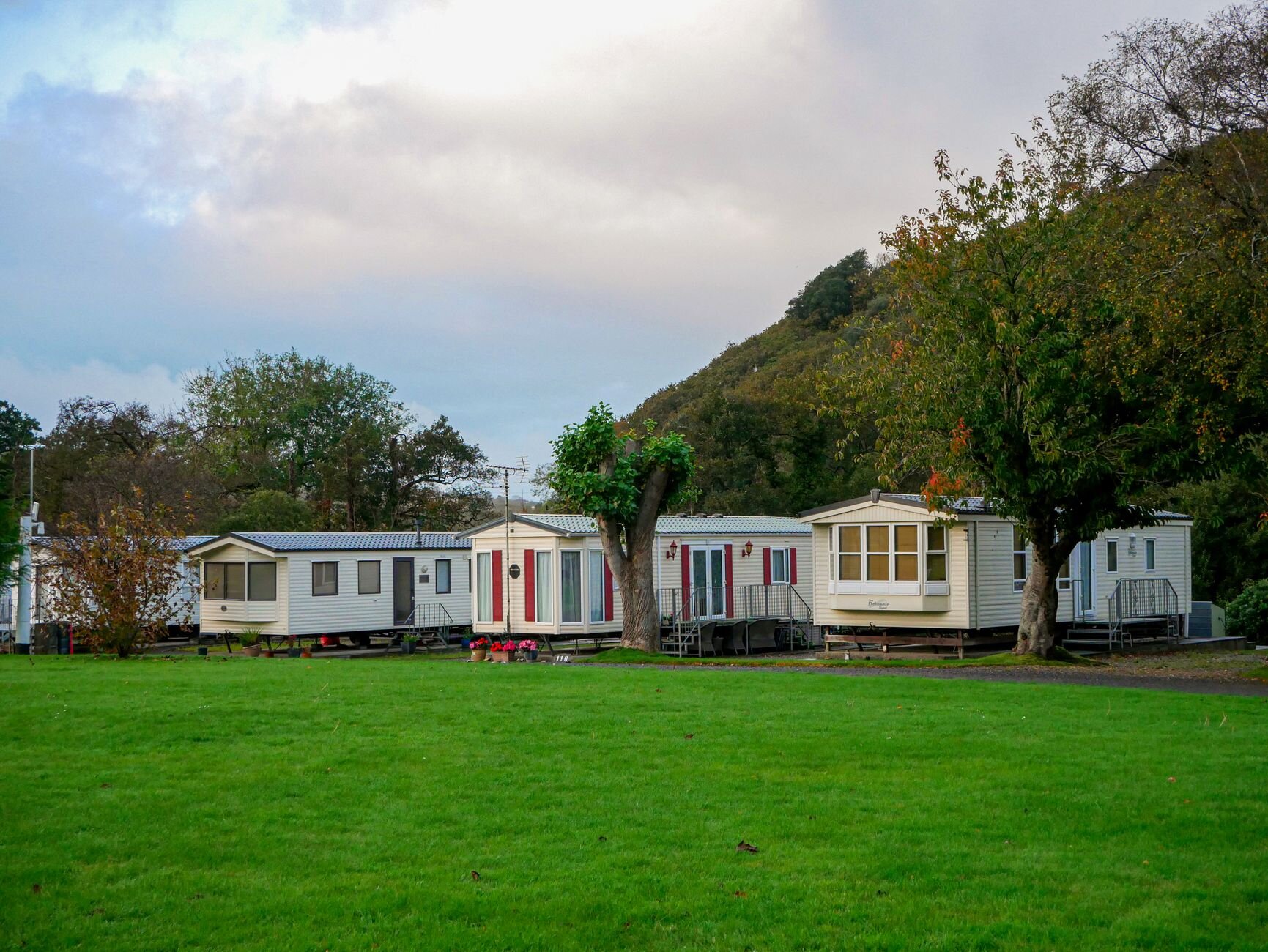
Data from the National Association of Realtors this year found that manufactured homes on owned land gained about 70% in value from 2019 to 2026, outpacing the roughly 59% gain for traditional single-family homes over the same stretch.
This data goes against the traditional wisdom that manufacturers homes depreciate, much like vehicles.
But, not all manufactured or mobile homes are set up to appreciate. A lot depends on how the home is titled.
...in as little as 3 minutes — no credit impact
What makes a mobile home 'real property' vs. 'personal property?'
Most manufactured homes start life the same way: built in a factory and shipped to its site on a steel chassis with wheels attached. At that point, the home is legally treated like a vehicle — personal property, with a certificate of title instead of a deed.
Whether it stays that way is a matter of paperwork, not the quality of the home. A manufactured home becomes real property when it meets a few conditions, though exact rules vary by state:
- It's permanently affixed to a foundation, wheels and towing hitch removed
- It sits on land the homeowner owns, not a rented lot in a community
- The original certificate of title is surrendered and canceled with the state
- An affidavit of affixation is recorded with the county, tying the home to the land like a deed would
Once complete, the home and land can be treated as a single piece of real estate, the same as a site-built house.
All this traces back to the Federal Manufactured Home Construction and Safety Standards, or the HUD Code, which HUD put in place in 1976. The HUD Code governs how homes are built and inspected, but it doesn't determine how a specific home is titled once installed. That's state property law.
Whatever it takes in your state, getting a manufactured home registered as real property can create the potential for the home to appreciate, much like a traditional, stick-built home can appreciate.
Converting a manufactured home to real property
If you already own a manufactured home titled as personal property and later buy the land underneath it, conversion is still usually possible.
You'd need to cancel the existing certificate of title, file an affidavit of affixation with the county, and in some states, reassess the home for property tax purposes.
Better's guide to manufactured home prices breaks down typical foundation and installation costs. Requirements vary by state, so confirm the exact process with your local housing authority or a title company before assuming a home qualifies.
Do mobile homes appreciate in value? What the 2026 data shows
According to Realtor.com's March 2026 Perks of the Park Report, manufactured homes on land the owner controls appreciated about 70% between 2019 and 2026, outpacing the roughly 59% gain for traditional single-family homes over the same period.
Homes on leased land, far more likely to remain personal property, appreciated a more modest 51.6%.
That gap tracks with where demand has concentrated: growth in manufactured homes has been strongest in Sun Belt markets, popular among retirees and value-focused buyers relocating from higher-cost states. The median mobile home listing price sat around $141,450 in February 2026, well below the roughly $410,000 median for a single-family home.
Appreciation isn't the only variable that matters, though. The same report notes manufactured homes typically spend about 18 days longer on the market and are more likely to need a price cut before selling.
Faster appreciation on paper doesn't always mean an easy exit at sale time.
Real property vs. personal property: how the difference affects financing
Financing is where the real property distinction has the most practical impact.
Homes titled as personal property are financed with chattel loans, the same category used for vehicles or equipment, secured by the home rather than the land. Chattel loans tend to carry higher rates and shorter terms than a mortgage, since the collateral is considered higher risk.
Disclaimer: Loan terms, rates, and eligibility vary by lender and borrower. This isn't a guarantee of any specific rate or approval.
Homes titled as real property open the door to standard mortgage-style financing:
- Conventional loans are the most common path once a home is classified as real property and meets the lender's foundation and land-ownership requirements.
- FHA loans can offer more flexible credit and down payment requirements. See FHA vs. conventional loans for how they compare.
- VA loans are available to eligible veterans, service members, and some surviving spouses. Our VA loan vs. conventional loan guide covers the tradeoffs.
Freddie Mac's manufactured home mortgage guidelines require the land to be owned by the borrower and the home to be classified as real property before it's eligible.
If a home doesn't clear that bar, it likely won't qualify for the financing that supports long-term appreciation either.
Better's mortgage calculator can help you compare costs across loan types.
...in as little as 3 minutes — no credit impact
The risks and downsides of buying a mobile home as an investment
None of this makes manufactured housing a guaranteed win. Worth being direct about the tradeoffs:
- Land-lease communities carry real downside. Without owned land, the home is almost certainly personal property, chattel-financed, and more exposed to depreciation.
- Resale can take longer. An 18-day-longer average time on market and higher odds of a price cut mean appreciation on paper doesn't always translate into a fast, full-price sale.
- Zoning and insurance vary by area. Not every lot allows a manufactured home, and insurance policies are less standardized than typical homeowners coverage.
- Pre-1976 mobile homes carry added risk. Homes built before the HUD Code took effect don't meet current federal safety standards and are often ineligible for standard financing.
These risks aren't unique to manufactured housing, but they're worth weighing here specifically, since appreciation data alone can make the case sound stronger than it is for any individual buyer.
Should you buy a mobile home as an investment?
The home itself is almost never the deciding factor. The land underneath it — whether you own it, and whether the home is properly titled as real property — determines whether it behaves like real estate or a depreciating asset.
For buyers who can pair a manufactured home with owned land, the 2026 data makes a reasonable case: lower entry cost, competitive appreciation, and access to the same financing tools used for site-built homes, including the equity that builds over time.
For a rented-lot community, the calculus is different — lower upfront cost, but less certainty about long-term value and financing closer to a vehicle loan than a mortgage.
Either way, start by confirming, and not assuming, how a home is titled or can be titled, and what that means for property taxes before making an offer.
Frequently Asked Questions
I found a manufactured home on land I'd own outright. Will it actually build equity like a regular house?
If the home is (or can be) titled as real property and you own the land, it's treated as real estate for financing and appreciation purposes. Owned-land manufactured homes have actually outpaced single-family appreciation in recent years, per Realtor.com, though results vary by market and condition.
I only have $15,000 saved. Is a mobile home a realistic way to become a homeowner instead of renting?
It can be, especially if you can buy or already own the land. Median manufactured home prices run well under half a typical single-family home, but $15,000 may or may not cover a down payment, foundation work, and closing costs depending on loan type.
What's the difference between a chattel loan and a mortgage for a manufactured home, and which one will I qualify for?
A chattel loan finances the home only, like a vehicle loan, and applies when the home is personal property. A mortgage finances home and land together and requires real property titling. Which one you qualify for depends on land ownership, foundation status, and factors like credit and income.
If I buy a mobile home on a rented lot in a community, will it lose value over time?
Not necessarily, but it's a real risk to plan for. Homes on leased land are typically personal property and appreciated more slowly, about 51.6% from 2019 to 2026, versus roughly 70% for homes on owned land, per Realtor.com.
Can I get an FHA or VA loan for a manufactured home, or do I need a special lender?
Both can finance eligible manufactured homes titled as real property that meet program-specific requirements, including foundation and land-ownership rules. Not every lender offers manufactured home financing, so confirm eligibility directly.
How do I convert my manufactured home from personal property to real property?
Generally: permanently affix the home to a foundation on land you own, surrender the existing certificate of title, and record an affidavit of affixation with your county. Requirements vary by state, so confirm with your local housing authority or a title company.
Do manufactured homes really sell slower than regular houses, and how much does that matter if I need to move in a few years?
On average, yes: about 18 days longer on market, with a higher likelihood of a price cut, per Realtor.com's 2026 data. If you expect to sell within a few years, weigh that against the lower upfront cost and appreciation potential.
Is it better to buy a manufactured home with land or rent a lot in a community if I want it to appreciate?
Owning the land tends to produce stronger appreciation and standard mortgage financing, while renting a lot usually means personal-property titling, chattel financing, and slower growth. Owning land costs more upfront, so the tradeoff comes down to down payment and how long you plan to stay.
The bottom line
Mobile homes aren't automatically a good or bad investment. The answer depends on a paperwork distinction most buyers don't check until it's too late.
Real property status, tied to land ownership and proper titling, separates manufactured homes that build equity like real estate from ones that risk losing value like a vehicle.
Before you fall in love with a specific home, confirm the land situation and how it's titled. From there, checking your financing options is the clearest way to know what you'd qualify for.
...in as little as 3 minutes — no credit impact
Market data referenced in this article is sourced from Realtor.com's March 2026 Perks of the Park Report. Rates, loan terms, and financing eligibility vary by lender and borrower and are not guaranteed. This article is for informational purposes only and is not an offer to lend or a source of investment advice.