
What you’ll learn ✅
— What’s considered a single-family home
— Pros and cons of buying a single-family home
— Important financial factors to consider
— How to choose between a detached single home and other property types
For generations, the American dream has meant living in a stand-alone family home with room to grow. It’s about having a place to put down roots and a house to call your own.
But buying a single-family residence isn’t the only way to achieve your goals. If you’re trying to decide whether your dreams involve a single-family home, it helps to know exactly what that means and how it compares to other options.
So what’s a single-family home, and why have they been popular for so long? This guide covers the characteristics of single-family homes, pros and cons of owning one, and how they stack up against other property types. We’ll also break down some key financial considerations and how you can get pre-approved for home financing online.
What’s a single-family home?
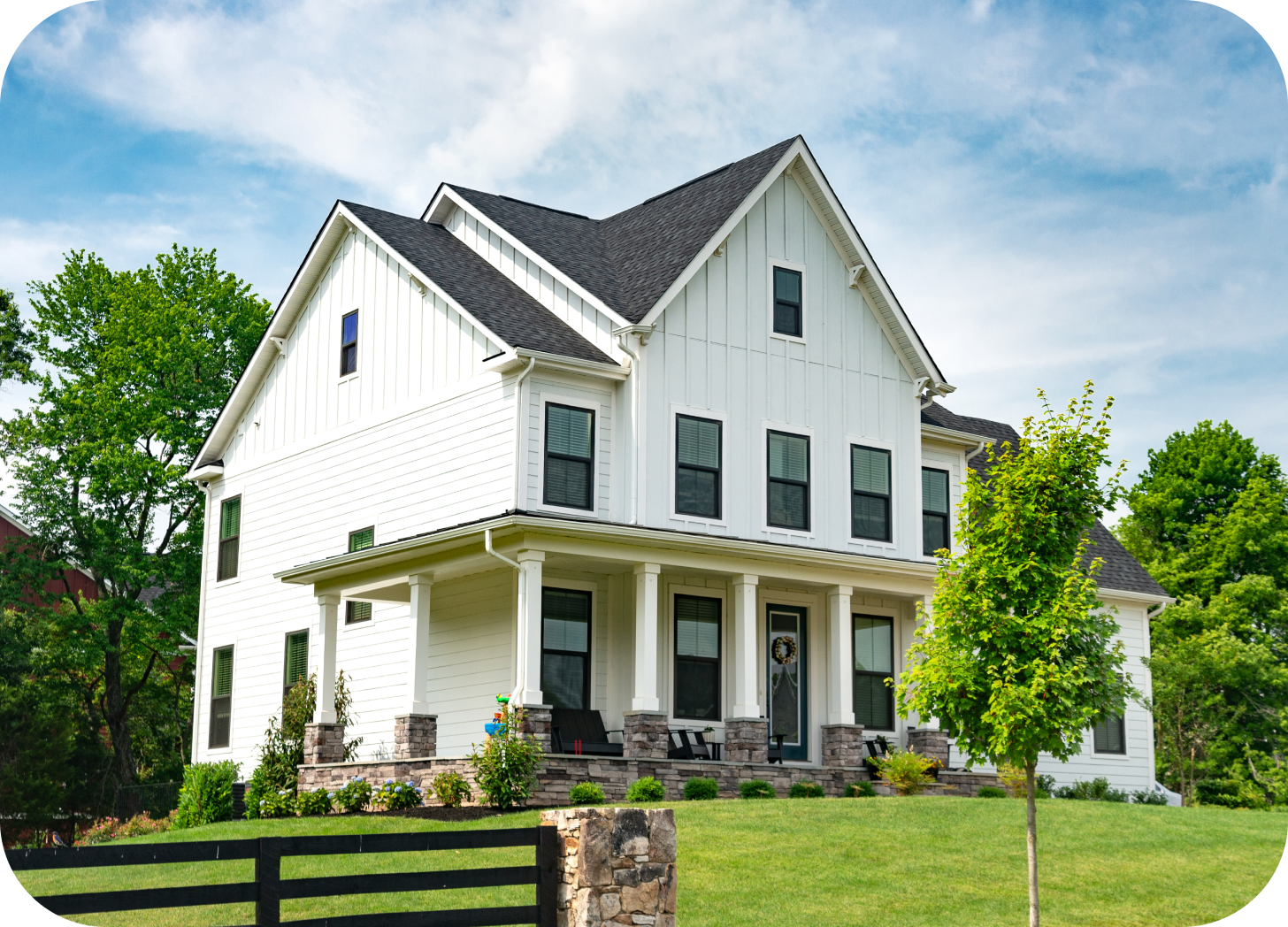
A single-family home is typically a stand-alone dwelling unit designed for one household to occupy. Legally, it must have its own private entrance, utilities, and parcel of land. It’s managed by the owner and doesn’t have interior spaces that are shared by other households.
Contrary to the name, whether a property is classified as a single-family home has nothing to do with how many people live in it or how they’re related to each other. “Single family” refers to the type of structure and property, not the occupants. A big family or an individual could live in a single-family residence, as long as they represent one household.
Most single-family houses are detached (no shared walls). But some semi-attached homes — such as duplexes, townhouses, or rowhouses — may also be considered single-family structures if each residence is separated by a ground-to-roof wall. That means each home has independent utilities and no units above or below it.
Features and attributes of a single-family home
Single-family homeowners typically enjoy the following features:
— No shared property or utilities: You don’t have to share indoor space, HVAC, or utility meters with neighbors.
— Single-owner management: You get control over ownership and maintenance, including decisions about repairs, improvements, and landscaping.
— Land ownership: You own the structure and the land it sits on.
— Independent access: You get your own private entrance with direct street access.
Pros and cons of a single-family home
Like any real-estate purchase, buying a single-family home comes with pros and cons.
Pros of a single-family home
— Extra privacy: Detached homes don’t have shared walls, which usually translates to quieter, more private living.
— Plenty of space: Many single-family homes come with yards, garages, and more indoor square footage than multi-family units.
— Freedom to customize: You can often do landscaping projects, additions, or renovations with fewer HOA and code restrictions, giving you the ability to personalize your home to your tastes.
— Potential for equity growth: Well-located single-family homes tend to appreciate quickly and hold their value over time.
Cons of a single-family home
— Higher purchase price (usually): Compared with condos in similar locations, single-family homes tend to cost more up front.
— Ongoing upkeep costs: From roof replacements to landscaping, you’re typically solely responsible for maintaining your single-family household (or hiring professionals).
— More responsibility: Unplanned repairs and seasonal chores require time and money, so you need to dedicate these resources accordingly.
— Fewer on-site amenities: Unlike some condos and apartment buildings, single-family homes typically lack shared gyms, pools, and other amenities.
Single-family homes vs. other housing options
Wondering what type of home is right for you? Here’s a side-by-side breakdown of single-family homes compared with townhouses and condos to help you decide:
| Factor | Single-family home | Townhouse | Condominium |
|---|---|---|---|
| Structure | Usually detached (sometimes semi-detached); one dwelling on its own lot | Attached rows; multi-floor home sharing side walls | Unit within a larger residential building; shared common areas |
| What you own | The house and the land | The unit and usually the land beneath it; varies by community | The unit interior; common areas usually jointly owned via an HOA |
| Standard monthly fees | None (unless there’s an HOA); you budget for your own maintenance | Usually lower HOA fees than condos; some exterior maintenance may be covered | HOA fees usually higher due to common services and amenities |
| Maintenance | Owner is responsible for interior and exterior upkeep | Owner vs. HOA coverage varies; often more owner responsibilities than condos | HOA usually handles exterior and common areas; owner maintains interiors |
| Privacy | Highest | Moderate | Lowest |
| Amenities | Varies by neighborhood; usually fewer or no shared amenities | May include small shared amenities via HOA | Frequently include gyms, pools, and lounges |
| Typical up-front prices | Usually higher than townhouses and condos in similar areas | Usually in-between single-family homes and condos | Usually the most affordable option in metro areas |
Looking for a streamlined path to buying any of these options? Better offers a completely digital mortgage pre-approval that takes just three minutes.
...in as little as 3 minutes – no credit impact
Key financial considerations for a single-family home
Before you decide whether a single-family home is the best option, try to estimate the total cost of ownership — including unforeseen expenses. This matters because the monthly payments are just one part of the complete picture.
Consider the following financial obligations:
— Home-maintenance reserve: A good rule of thumb is to save 1–4% of your home’s value every year for maintenance.
— Emergency repairs: Set aside a cash fund of three to six months of your total household expenses for urgent issues like heating failures, roof leaks, or burst pipes.
— Monthly mortgage payments: Make sure you can budget for principal, interest, taxes, and insurance, keeping in mind that some costs rise over time.
— HOA dues (if applicable): Some single-family homes have HOA dues for maintaining private roads, landscaping, and amenities.
— Foreseeable replacements and upkeep: Try to estimate timelines and allocate funds to pay for big-ticket items like roof, HVAC, and window replacements.
— Utilities and routine services: Seasonal tasks like snow removal, gutter cleaning, and annual HVAC servicing are essential to budget for.
Looking for a simple way to figure out how much you can afford? Use Better’s mortgage calculator for a faster, more accurate estimate.
Is a single-family home right for you?
Whether you should buy a single-family home depends on your personal goals and financial readiness. Buying property is a major decision, whether you’re purchasing your dream home in the suburbs or investing in a condo on the coast for rental income. But if you’re looking for a home to act as your primary residence, you need to think about your lifestyle, family size, and plans for the future.
What are your main goals? Some people really want to own a home in a good school district. Other families need extra yard space or separate quarters for their in-laws or adult children. Affordability is another important consideration. How much can you put down? What kinds of loans do you qualify for?
Additionally, economic and social expectations have shifted a lot in recent years. While many families still want to carve out their slice of that white-picket-fence suburban family dream, others may prioritize affordability, walkable neighborhoods, and proximity to work or amenities.
No matter what type of house you choose, Better’s flexible mortgage options help find your dream home without the hassle.
...in as little as 3 minutes – no credit impact
Get pre-approved for your slice of the American dream
Everyone’s dream home looks a little different. Whether you’re ready to buy that classic two-story single-family home or you want a trendy downtown condo, you need financing that works for you. Better can take the guesswork and stress out of the home-financing process.
Browse diverse loan options and flexible rates to suit your needs, and get pre-approved for a home loan in as little as three minutes online.
...in as little as 3 minutes – no credit impact