
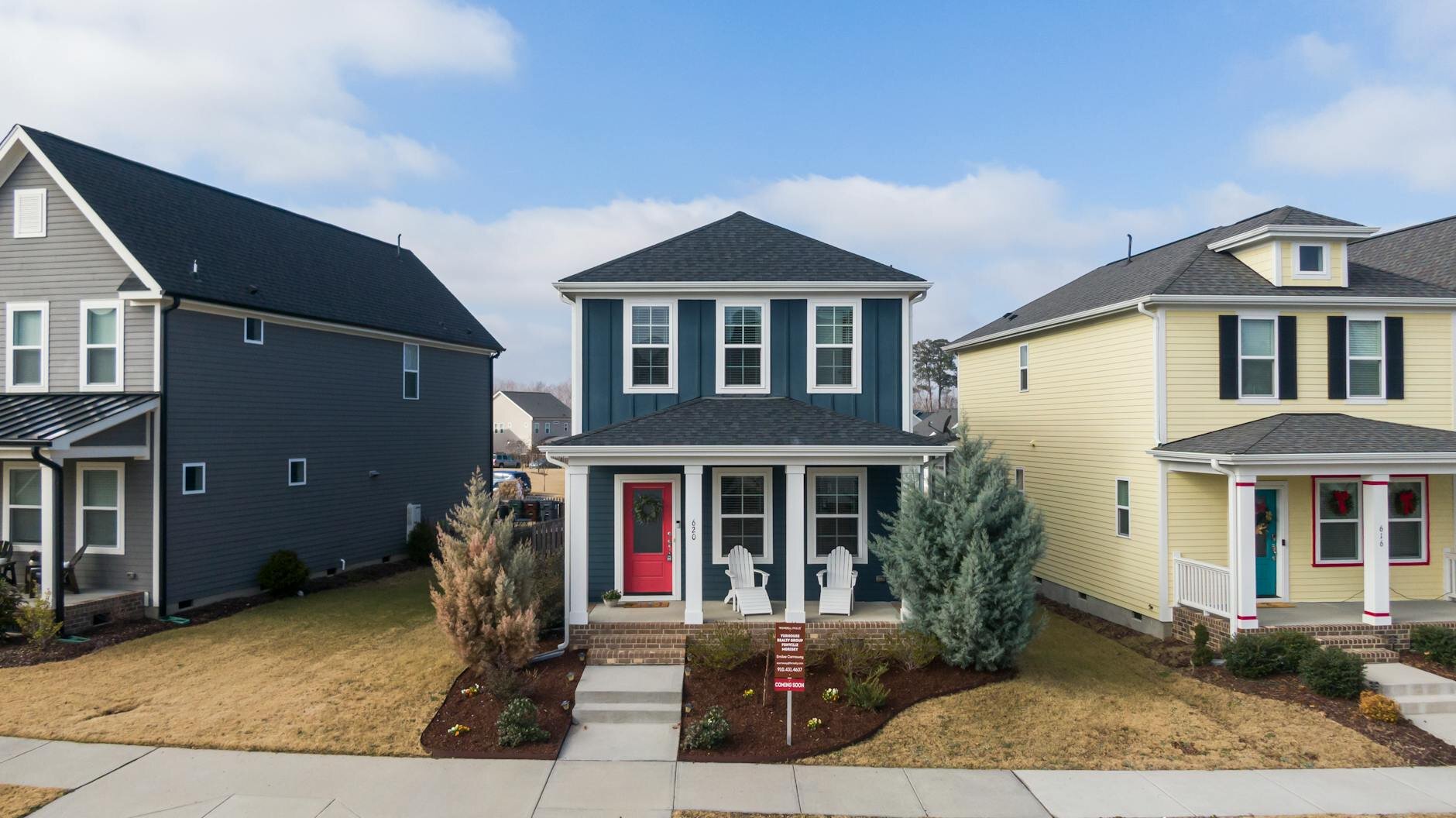
Most buyers who earn $70,000 a year can qualify for houses priced between $210,000 and $290,000.
But every borrower is unique. Your exact borrowing power depends on several key factors that lenders evaluate during the mortgage approval process.
For instance, your debt-to-income ratio, credit score, and down payment amount will make a big difference as lenders decide how much you can borrow for a new home.
How much house can I afford with a $70K a year salary?
A $70K annual salary translates to $5,833 in monthly gross income, which becomes the foundation for mortgage calculations. Lenders may apply the 28/36 rule: your housing payment shouldn't exceed 28% of gross monthly income, while total monthly debts shouldn't surpass 36%.
With your $5,833 monthly income, this means keeping your mortgage payment under $1,633 and total debt payments below $2,100. These thresholds determine your buying power within that $210,000 to $290,000 range.
Your credit score, existing debts, and down payment size help decide where you land within this spectrum. A buyer with excellent credit, minimal debt, and 20% down might comfortably afford a $280,000 to $290,000 home. Someone with higher monthly obligations or a smaller down payment might find their sweet spot closer to $210,000 to $230,000.
...in as little as 3 minutes – no credit impact
Examples of home affordability with a $70K salary
Here's how different scenarios play out with current market conditions:
20% down scenario
A $290,000 home with $58,000 down at 6.5% interest creates monthly payments around $1,460 (including taxes and insurance).
10% down scenario
A $250,000 home with $25,000 down at 6.5% interest generates monthly payments around $1,580.
5% down scenario
A $230,000 home with $11,500 down at 6.5% interest results in monthly payments around $1,620.
These scenarios are for example purposes only. Your real numbers would be a little different. But in general, the smaller your down payment, the higher your monthly payment due to mortgage insurance requirements and a higher loan amount.
What's your scenario?
Use a mortgage calculator with current mortgage rates to model your specific situation and see how different variables affect your monthly payment on a $70K salary.
Factors that affect how much house you can afford
Your buying power with a $70k salary shifts based on three critical factors. Each of these factors can move your price range by tens of thousands of dollars, making the difference between a modest starter home and your dream property.
Credit score
Your credit score affects both approval odds and interest rates. A score above 740 unlocks the best rates on conventional loans, potentially saving thousands over the loan term. Scores below 620 typically limit options to FHA loans with required mortgage insurance, adding $100 to 300 monthly to your payment.
A 100-point credit score difference can change your approval chances and alter monthly payments by $100+ on the same home. For a $250,000 house, improving your score from 620 to 740 could reduce your monthly payment by $150 and save $54,000 over 30 years.
At Better, you don't need perfect credit to qualify. In fact, we have loan options that allow FICO scores as low as 580.
Debt-to-income ratio
This ratio compares your existing monthly debt payments to gross monthly income. Lenders typically prefer a debt-to-income ratio below 36%, though some, like Better Mortgage, can allow up to 45-50%, especially on FHA loans. With a $70k salary providing $5,833 monthly income, keeping total debts under $2,100 maximizes borrowing potential.
Every $100 in monthly debt obligations reduces home buying power by approximately $15,000 to $20,000. A $300 car payment could lower your affordable home price from $280,000 to $240,000. Paying off credit cards or student loans before applying can dramatically expand your options.
Loan type
Different mortgage programs affect borrowing power for $70k earners.
- Conventional loans require 3% to 20% down and solid credit but can offer competitive rates for buyers with solid credentials.
- FHA loans accept lower credit scores and higher debt ratios, but require mortgage insurance throughout the loan term.
- VA loans provide 0% down options for veterans, service members, certain reservists, National Guard members, and select surviving spouses.
- USDA loans help buyers in rural areas access affordable financing.
The right type of mortgage loans can increase what home you can afford on a $70k salary.
Estimating the home you can afford on a $70K income
As you can see, mortgage lending is complicated. There's no one-size-fits-all answer to affordability questions.
A mortgage calculator with current mortgage rates shows exactly how your credit score, loan term, and down payment shift these numbers. The math becomes clearer when you input real scenarios rather than relying on broad estimates.
Your down payment size changes what you can afford. A $250,000 home requires different monthly payments depending on whether you put down $50,000 (20%) or $7,500 (3%). This is ypically a $200 to $300 a month difference. This gap widens or shrinks based on interest rates and loan terms.
Different mortgage types and first-time homebuyer programs can expand your options beyond conventional loans. Each option comes with distinct requirements and benefits that could push your buying power higher or lower than initial calculations suggest.
Want to see how much house you can afford in minutes, without hidden fees or pushy sales tactics? Our all-digital platform gives you personalized rate quotes and pre-approval letters instantly, so you know your real buying power before you start shopping.
...in as little as 3 minutes – no credit impact
Strategies to afford a larger home on a $70K income
Your buying power on a $70K salary can extend beyond initial estimates with the right strategy. These key strategies can potentially push your price range from $250,000 to $290,000 or higher.
Make a bigger down payment
A larger down payment delivers the most immediate impact on affordability. Here's what this means in practical terms:
- Eliminate PMI: With 20% down, you avoid private mortgage insurance, saving $100 to $200 monthly
- Lower monthly payments: Each additional $10,000 down reduces your payment by approximately $50-60
- Stronger loan terms: Lenders offer better rates when you put more money down
For a $280,000 home, the difference between 5% down ($14,000) and 20% down ($56,000) equals roughly $300 in monthly savings. Setting up automatic transfers to a dedicated savings account builds this fund systematically.
Consider different loan options
The right type of loan can enhance borrowing power. Borrowers who can't qualify for an affordable conventional loan should consider:
- FHA loans: Down payments as low as 3.5%, ideal for buyers with credit scores around 580-620
- VA loans: Zero down payment for military members, often with competitive rates
- USDA loans: Rural property financing with no down payment required
A mortgage calculator can help compare different options effectively and determine which maximizes your $70K salary.
Pay off existing debts
Reducing current debt obligations improves your debt-to-income ratio and qualifies you for larger loans. The math works powerfully in your favor:
- Credit card debt: Paying off $200 monthly in credit card payments could increase buying power by $30,000 to $40,000
- Car loans: Eliminating a $300 monthly car payment potentially adds $45,000 to $60,000 to your home price range
- Student loans: Reducing these payments frees up income for higher mortgage qualifications
Improving your credit score through debt reduction also secures better interest rates, making monthly mortgage payments more manageable on your $70K income.
First-time home buyer programs
First-time homebuyer loan grants programs can expand your buying power significantly on a $70K income. These specialized programs typically provide:
- Down payment assistance (often 3-5% of purchase price)
- Closing cost grants or credits
- Reduced interest rates
- Tax credits and deductions
State housing agencies frequently offer income-based assistance that aligns well with a $70,000 salary.
Common questions about buying a house with a $70K salary
What type of mortgage loan works best with a $70K salary?
Your loan choice depends on your specific financial picture. A conventional loan down payment of 20% typically offers the lowest long-term costs if you have solid credit above 680. Of course, not every buyer can come up with that much cash. FHA loans work well with lower credit scores and require just 3.5% down, though they include mortgage insurance costs. Compare all types of mortgage loans to find the best fit for your situation.
Is $70K enough to buy a home in today's market?
A $70K salary puts you above the national median income, making homeownership achievable in most areas. Location dramatically affects your buying power. This income might secure a 3-bedroom home in Cleveland or Charlotte, but only a 1-bedroom condo in San Francisco or New York.
How much does credit score matter at this income level?
Your credit score can shift your monthly payment by $100 or more on the same house. The minimum credit score for mortgage approval typically starts around 620, but scores above 740 unlock the best rates. For example, on a $250,000 home, a buyer with a 640 credit score might pay $1,650 monthly, while someone with a 760 score pays $1,550. That's a $100 monthly difference that adds up to $36,000 over 30 years.
Preapproval can show your unique borrowing profile
A $70K salary positions you well for homeownership, with buying power typically ranging from $210,000 to $290,000 based on your financial profile.
Every borrower is different. A pre-approval can show where you stand by plugging your personal finances into the equation.
Better's preapproval can show results in as little as three minutes through soft credit check that does not lower your credit score.
...in as little as 3 minutes – no credit impact