
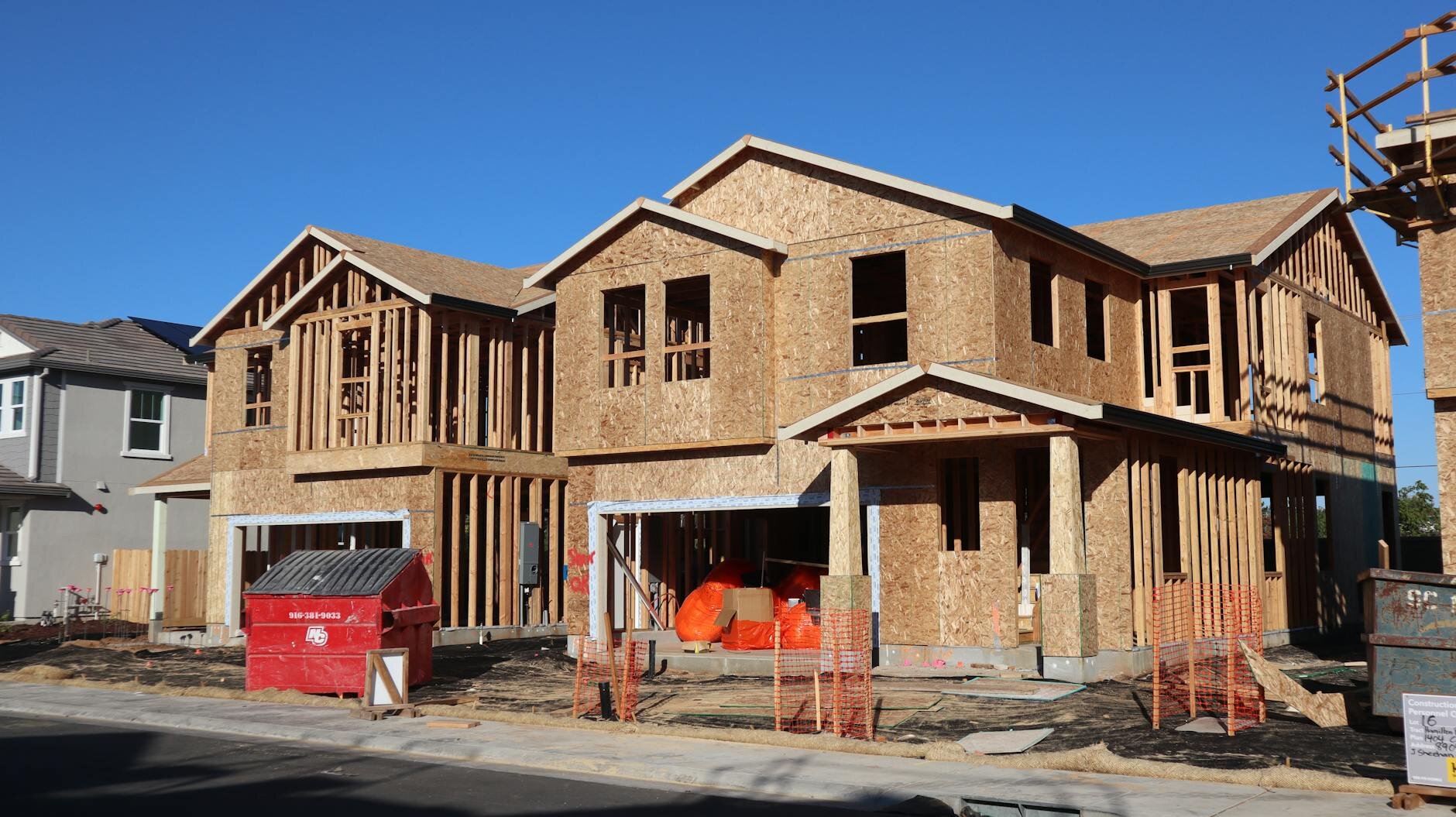
Whether to buy new construction or an existing home this year depends on your priorities, your timeline, and your financing, but the market context has shifted meaningfully. For the first time in decades, new homes are now selling at a lower national median price than existing homes, largely because builders have cut prices, built on smaller lots, and offered incentives like rate buydowns to move inventory.
- If location flexibility and lower upfront price matter most to you, new construction deserves a serious look.
- If you need to be in a specific neighborhood or school district, or you want to move quickly, an existing home is likely the more practical path.
Each option carries distinct risks: New construction timelines can slip, and builder rate buydowns expire, meaning your payment rises once the incentive period ends. Existing homes may require immediate repairs or updates that add to your real cost of ownership.
The most important first step for either path is knowing your actual budget. Getting pre-approved tells you exactly how much you can borrow and at what rate, giving you an honest basis for comparing both options.
...in as little as 3 minutes — no credit impact
What's actually changed in the 2026 housing market
For most of the last 50 years, buying new construction meant paying a premium. Newly built homes commanded higher prices than comparable existing homes. You were paying for fresh materials, modern layouts, and the fact that nobody had lived in the home before you.
That relationship has reversed. According to recent industry data, the median price for a new single-family home in the first quarter of 2026 was $403,200, about $1,400 less than the median price of an existing home at $404,600. That marks the fourth consecutive quarter in which existing home prices have exceeded new home prices, a pattern that has only occurred a handful of times in the past five decades.
Two forces are driving the inversion from opposite directions. On the new construction side, builders have responded to affordability pressure by building on smaller lots, constructing smaller homes, and offering aggressive incentives, including mortgage rate buydowns, price cuts, and upgrade packages, to attract buyers in a rate-sensitive market. Recent industry data shows roughly 40% of builders cut prices in late 2025, with average reductions around 5%, and the majority are offering some form of incentive.
On the existing home side, a persistent lock-in effect is keeping inventory tight. Many current homeowners secured mortgage rates below 4% during the pandemic years and are reluctant to sell and take on a new loan at today's rates near 6% or above. That reluctance constrains supply and keeps prices elevated on the resale market, even as buyer demand remains soft.
The result is an unusual window for buyers — one that rewards understanding the full picture before committing to either path.
The case for new construction right now
The price advantage is real, but it is not the only reason to consider new construction. Several factors make newly built homes genuinely compelling for the right buyer in 2026.
Builder incentives can meaningfully lower your cost
Beyond price cuts, many builders are offering how rate buydowns work as closing incentives, most commonly a 2-1 buydown structure. Under a 2-1 buydown, your interest rate is reduced by two percentage points in year one and one percentage point in year two, before settling at the full note rate in year three. On a $400,000 loan at a 6.5% note rate, for example, that buydown could reduce your monthly principal and interest payment by several hundred dollars in the first two years.
Example is for illustrative purposes only. Rates, payments, and total interest will vary based on credit profile, loan terms, and market conditions.
The key consideration: the buydown is temporary. Your payment in year three will reflect the full rate. Buyers who plan for that increase, rather than stretching their budget based on the reduced year-one payment, are well-positioned. Buyers who treat the buydown as a permanent feature may find themselves financially strained when the rate resets.
Other meaningful advantages of new construction right now include:
No immediate repair exposure. Existing homes often come with deferred maintenance, an aging HVAC system, a roof approaching the end of its life, plumbing that needs updating. A newly built home starts the clock fresh. New construction warranties typically cover structural defects for ten years and systems for two years.
Energy efficiency. Newer homes are built to current codes, which generally means better insulation, more efficient windows, and lower utility costs over time. That ongoing savings is a real part of the total cost of ownership.
Customization. Buying a home early in the construction process, before it reaches a spec house stage, often allows you to make selections on finishes, flooring, and fixtures. That personalization has real value that doesn't show up in the purchase price comparison.
New construction trade-offs to weigh
Timeline risk is the primary downside. New construction closings are subject to construction delays — weather, supply chain issues, labor shortages. If you are selling an existing home and need to coordinate timing, that uncertainty is a material risk. Financing a new construction purchase also requires attention to rate lock timing: rates can change significantly between when you sign a purchase contract and when the home is ready to close.
Location is the other constraint. New construction tends to be concentrated in developing suburbs and outer rings of metro areas. If your priorities include a specific established neighborhood, school district, or commute corridor, the available new construction options may not fit.
The case for an existing home
Existing homes still offer advantages that new construction cannot match, particularly for buyers whose needs are location-specific or timeline-sensitive.
Location optionality is the most significant. The existing home market covers virtually every neighborhood, school district, and commute corridor in the country. If being within a specific boundary matters, for schools, proximity to family, walkability to work, an existing home gives you access to that geography in a way new construction typically cannot.
Speed is the other key advantage. A transaction on an existing home can close in 30 to 45 days from an accepted offer. New construction timelines commonly run six months to more than a year from contract to closing, depending on where the home is in the construction process.
Seller credits are also worth understanding. In a slower market, motivated sellers can offer credits toward closing costs or rate buydowns at closing, effectively doing what builders do with their incentive packages. A buyer who understands how to negotiate seller concessions can reduce the effective cost of an existing home purchase meaningfully. How to shop around for mortgage rates across multiple lenders applies here too. The rate you lock on an existing home purchase is not fixed until you choose it.
The trade-off is repair exposure. Unlike a newly built home, an existing home carries an unknown maintenance history. A thorough inspection is essential, and even a good inspection does not eliminate the possibility of near-term repair costs. Factoring a realistic repair reserve into your total cost comparison is important for an honest apples-to-apples evaluation.
How to compare the true cost of each
Purchase price is a starting point, not the full picture. A fair comparison between a new construction home and an existing home should account for the following:
| Factor | New construction | Existing home |
|---|---|---|
| Purchase price | Median lower nationally; varies by market | Median slightly higher nationally; varies significantly |
| Builder incentive value | Rate buydown or price cut often included | Seller credits negotiable; not guaranteed |
| Immediate repair costs | Typically none | Variable; inspection-dependent |
| Energy costs (ongoing) | Generally lower (newer systems, tighter envelope) | Variable; depends on age and condition |
| Closing timeline | 6–12+ months for build; faster for spec inventory | 30–45 days from accepted offer |
| Customization | Available pre-construction | Renovation is post-purchase cost |
| Rate lock complexity | Higher — long build timeline | Standard |
Example is for illustrative purposes only. Actual costs, timelines, and incentive availability will vary by market, builder, and transaction.
Understanding current mortgage rates before you start comparing specific homes gives you a real baseline for both paths. The rate you qualify for today applies regardless of whether you are buying new or existing — but the timeline to closing affects how long you need to hold or extend a rate lock, which carries its own cost. Mortgage points are another tool worth understanding in this context: buying down your rate at closing is an option on either path, and knowing how to evaluate that trade-off puts you in a stronger negotiating position.
Questions to ask before you decide
Before committing to either path, work through these questions honestly:
How long do I plan to stay? Builder rate buydowns make more sense if you plan to stay through the adjustment period and beyond. If you might move within three to five years, the buydown math may not favor new construction.
Do I need to be in a specific location? If school district, neighborhood, or proximity to work is non-negotiable, let that narrow your search first — then evaluate what's available in that geography across both categories.
Can I handle a longer timeline? If you are currently renting month-to-month and have flexibility, a new construction timeline is manageable. If you are selling an existing home and need to coordinate closings, the uncertainty of a build timeline adds real complexity.
Am I comparing the same loan terms for both options? A builder's in-house lender may offer an attractive rate with the incentive package but less competitive terms overall. How to shop around for mortgage rates applies whether you are buying new or existing — comparing at least two or three lenders gives you a real picture of your options.
What does my pre-approval actually tell me? Knowing your maximum purchase price and estimated monthly payment for a specific loan amount is the foundation of a useful comparison. Tips for first-time homebuyers consistently point to pre-approval as the step that converts shopping from theoretical to actionable. The steps to buying a house are the same whether you choose new or existing — but they start in the same place.
...in as little as 3 minutes — no credit impact
FAQs about new construction vs existing home sales
Should I buy new construction or an existing home in 2026?
It depends on your priorities. New construction is worth serious consideration in 2026 because new homes are now priced below existing homes at the national median level — a reversal of the historical norm, and builders are offering meaningful incentives including rate buydowns and price cuts. Existing homes remain the better fit for buyers who need to be in a specific neighborhood, school district, or want to close quickly. Evaluate the true cost of each option for your specific situation, not just the list price.
I keep hearing new homes are cheaper than existing ones right now. Is that actually true, and does it apply to my area?
At the national median level, it's true. Recent industry data shows the median new single-family home sold for approximately $403,200 in the first quarter of 2026, compared to $404,600 for existing homes, the fourth consecutive quarter of this reversal. Whether it applies to your specific market varies. New construction tends to be more available in suburban and developing areas; urban and in-demand established neighborhoods may not show the same dynamic.
I'm a first-time buyer with a budget around $400,000. Would I get more for my money buying new construction or an existing home?
At that price point, both paths are viable, but the comparison depends on your market. New construction at that budget in most metro areas means a smaller or more suburban home, often with builder incentives that reduce your effective cost. An existing home at that price may offer more location options but could come with deferred maintenance costs. Get pre-approved first so you know what your monthly payment looks like at that price point for both options, then compare specific homes in your market.
A builder is offering me a 2-1 rate buydown to buy new construction. What happens to my payment when the buydown ends in year three?
In year three, your payment reverts to the full note rate — the rate stated in your mortgage contract. If your note rate is 6.5% and the buydown reduced it to 4.5% in year one and 5.5% in year two, year three and beyond will be at 6.5%. Make sure your budget works at that full rate before committing. The buydown makes the early years more affordable but does not change your long-term payment obligation.
Is it riskier to buy new construction or an existing home right now?
They carry different kinds of risk rather than more or less.
- New construction risk centers on timeline uncertainty and the buydown expiry. Your payment will increase in year three if you accept a rate buydown.
- Existing home risk centers on repair exposure. You are buying an asset with an unknown maintenance history. A thorough inspection reduces but does not eliminate that risk. In both cases, the most important risk management tool is buying within a budget you can sustain at the full payment, without relying on short-term incentives to make it work.
I need to be in a specific school district. Does that change whether I should buy new vs. existing?
Yes, significantly. If school district boundaries are non-negotiable, start your search there. New construction availability within established school district boundaries is often limited. Most new builds are in developing areas where districts are newer or less established. Check what, if any, new construction inventory exists within your required district before assuming the comparison is open. If new construction isn't available in that geography, an existing home is likely your only realistic option.
What's the difference between a builder incentive and a seller credit, and which is better for me?
A builder incentive, typically a rate buydown or price reduction, is offered by the builder to attract buyers to new construction. A seller credit is a concession a seller agrees to pay at closing on an existing home, often applied toward closing costs or a rate buydown through your lender. Both reduce your effective cost. The difference is negotiation: builder incentives are often packaged and non-negotiable; seller credits are the product of offer negotiation. In a slower market, seller credits can be a meaningful tool on existing home purchases. Neither is universally better. It depends on the specific deal and how each affects your payment and total costs.
How long does it typically take to close on new construction vs. an existing home?
An existing home transaction typically closes in 30 to 45 days from an accepted offer. New construction varies significantly depending on where the home is in the build process. A spec house — one that is already built or nearly complete — can close on a similar timeline to an existing home. A pre-sale contract, where you are buying before or early in construction, commonly takes six months to over a year to reach closing. Know which type of new construction you are considering before planning your timeline.
Making the decision
There is no universal right answer to new construction versus existing, only the right answer for your situation, your market, and your timeline. What has changed in 2026 is that new construction is no longer automatically the more expensive path, and the incentive packages builders are offering represent real value if you understand what you are getting and what you are not.
Whichever path you choose, starting with a real pre-approval gives you the foundation to compare honestly. Better's fully online process lets you see your actual rate and borrowing capacity in minutes, giving you the numbers you need before you start comparing specific homes.
...in as little as 3 minutes — no credit impact